Men’s Toupee vs Full Wig: Key Differences for Male Hair Replacement
Men’s Toupee vs Full Wig: Key Differences for Male Hair Replacement
If you are struggling with male pattern baldness, thinning crown or receding hairline, two mainstream hair replacement solutions are available: men’s toupees (hair toppers) and full men’s wigs. Many clients get confused about which one fits their hair loss condition and daily lifestyle. Below we break down their core differences, advantages and ideal users clearly.
1. Coverage & Basic Structure
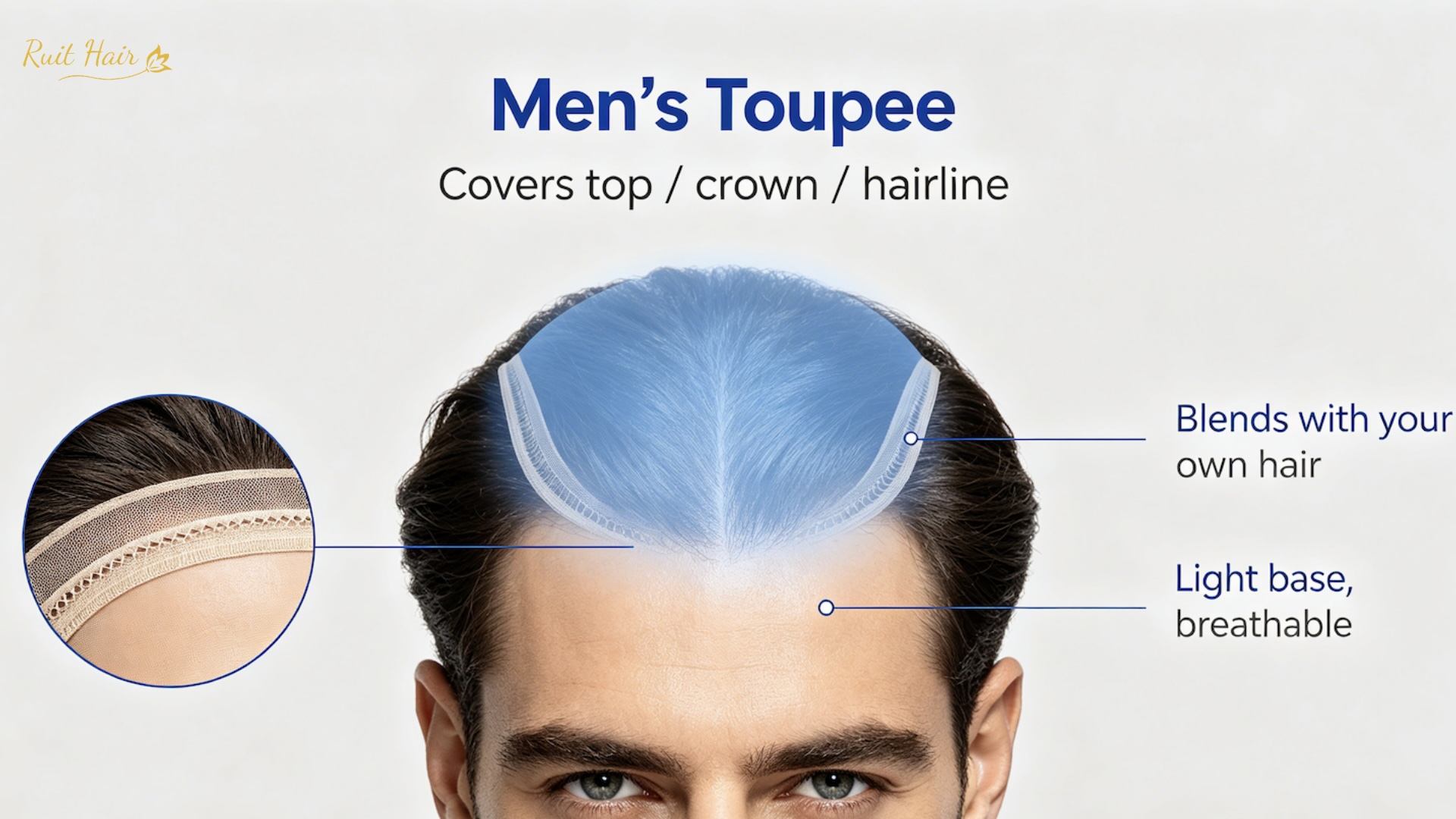
Men’s Toupee (Hair Topper / Hair Piece)
A toupee is a partial hair system only covering the thinning or bald area on the top/crown/front hairline. It leaves your natural side hair, back hair and nape fully exposed, and blends perfectly with your existing bio hair.The base size is customizable, ranging from small 4×6 inch patches to medium 8×10 inch tops. Most bases combine breathable lace at the hairline and durable PU skin around edges.
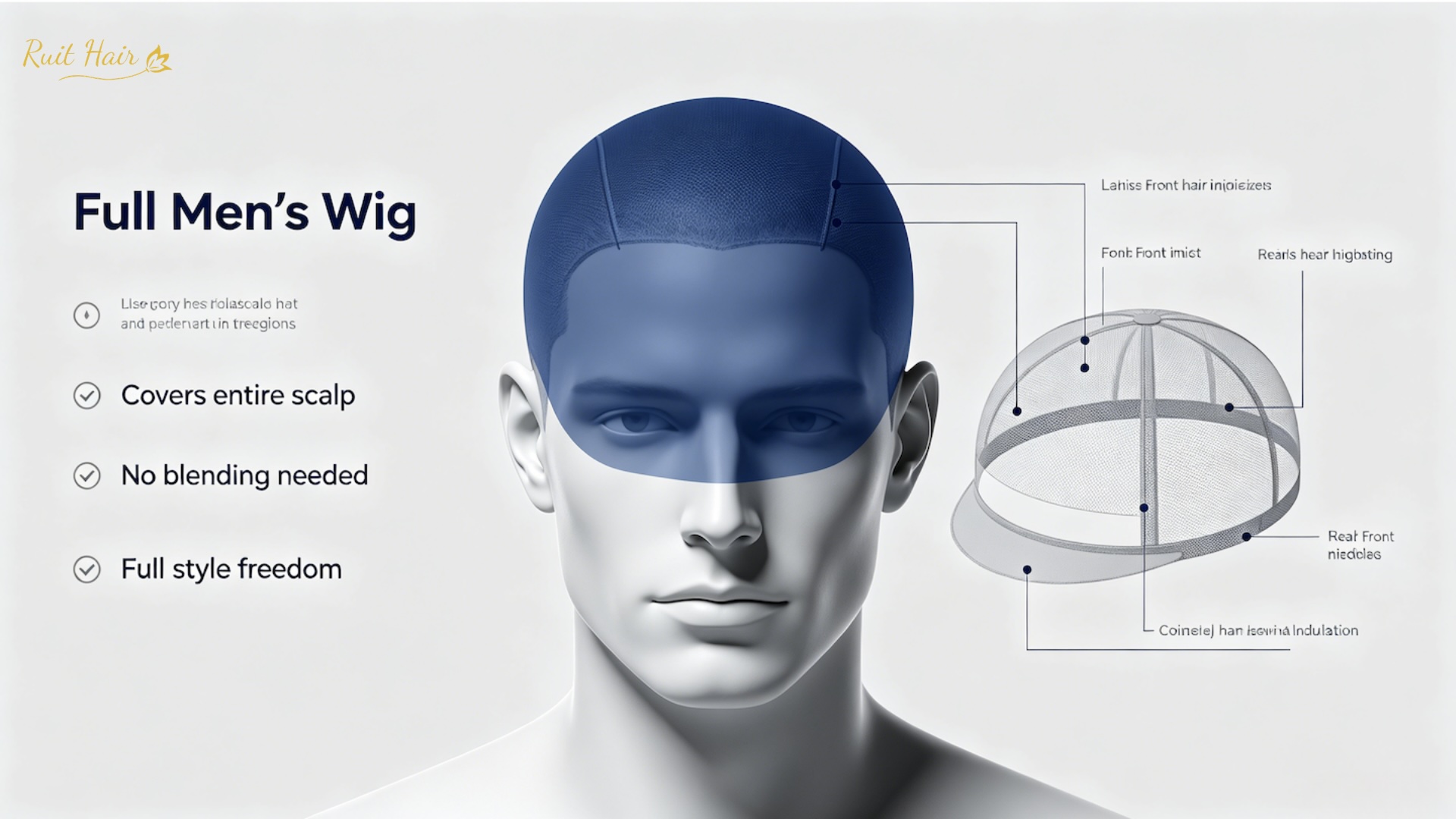
Full Men’s Wig
A full wig is a complete cap that covers your entire scalp from hairline to nape, fully hiding all your natural hair. It has a full circular base, either full lace, lace front with weft back or thin skin cap, offering total scalp coverage without relying on your original hair.
2. Who Each Product Is For
Choose a Toupee if you have:
Partial baldness, only thinning on crown or front hairline;
Plenty of natural hair on sides and back to attach the toupee;
Mild to medium male hair loss;
Want an ultra-natural look that matches your own hair texture and color.
Choose a Full Wig if you have:
Total baldness, alopecia, or severe full-head thinning;
No remaining natural hair to fix a partial hairpiece;
Medical hair loss from chemotherapy;
Wish to fully change hairstyle, length or hair color in one step.
3. Comfort, Breathability & Daily Wear
Toupee: Lighter weight, smaller base area. More breathable, less stuffy in hot weather. Easy to put on and take off daily with tape, glue or clips. Suitable for long-hour daily wear, work and sports.
Full Wig: Larger cap brings more hair volume but slightly heavier. It may feel warmer during summer. You need to tuck all natural hair under the cap before wearing, which takes extra preparation time.
4. Styling Flexibility
Toupee: You can style the topper together with your natural side/back hair. Classic men’s styles like side part, short crop and medium cut work best. The parting is limited to the covered top area.
Full Wig: Maximum styling freedom. You can part hair anywhere, try long hair, curly texture, bangs or completely new looks without matching your bio hair. No blending restrictions at all.
5. Price & Maintenance
Toupee: Smaller hair volume and base material lower the overall cost. Cleaning and upkeep are simple, with fewer fragile lace areas to damage. Service life lasts 6–12 months with proper care.
Full Wig: More human hair and full cap construction lead to higher prices. Full lace wigs require gentle washing to avoid tearing thin lace. High-quality human hair full wigs can last 1–3 years.
Final Quick Guide to Pick
For partial thinning, natural daily look, budget-friendly option → Men’s Toupee
For complete baldness, full style transformation, zero reliance on natural hair → Full Men’s Wig
Both products use 100% real human hair with customizable precut, density and base material. Contact our team to get a custom hair system tailored to your head size, facial features and hairstyle demands.