Q6 vs Australia Hair Systems: Client Selection | Ruit Hair
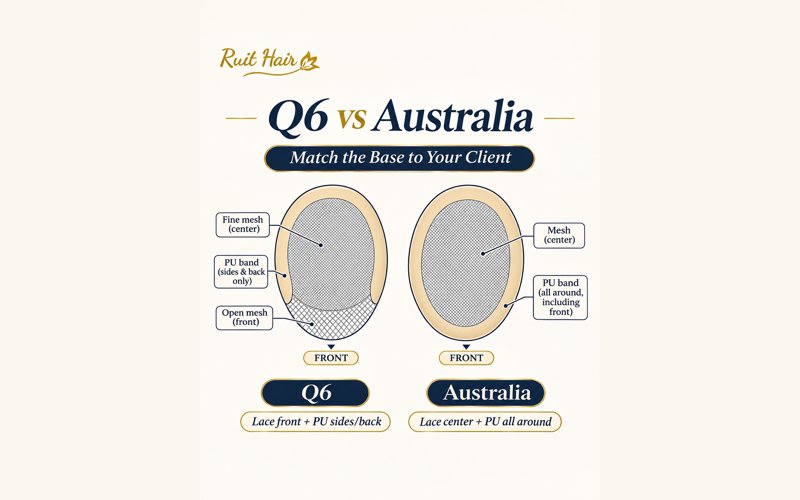
Q6 and Australia hair systems both combine lace with PU attachment areas. For salons and wholesale buyers, the most useful difference is where the PU is placed—especially at the front.
Ruit Hair's Q6 uses Swiss lace with PU-reinforced sides and back, leaving a lace front. The Australia/AUS model has a Swiss lace center with a clear PU perimeter all around, including the front. These layouts support different fitting and maintenance preferences.
This guide compares men's partial hair systems. Women's toppers and other custom versions should be assessed against their own specifications.
1. Q6: For Clients Who Prefer a Lace Front
Q6 is worth considering when the client wants a lace front together with PU attachment areas at the sides and back. It can be a useful starting point for someone who likes an off-the-forehead hairstyle and whose salon is comfortable fitting and maintaining a lace hairline.
The lace front is one part of the result. Front contour, density, knot treatment, placement, adhesive selection, and blending also matter. Show a representative sample rather than promising that the base will be invisible in every situation.
For a forward fringe, Q6 may still be suitable, but an exposed lace front may be less central to the decision. Review comfort, fit, and the client's maintenance routine alongside appearance.
2. Australia: For Clients Who Prefer an All-Around PU Attachment Zone
Australia combines a lace central area with a continuous PU perimeter. Consider it when the technician and client prefer a defined PU attachment zone around the whole unit.
The PU front should be assessed in the intended hairstyle. Australia should not be presented as a lace-front model. A forward or partially covered hairline may make the front edge less prominent, but the fitted appearance still needs individual assessment.
Inspect the actual perimeter width and thickness before planning attachment or trimming. A model name does not establish every dimension or customization possibility.
3. Which Model Suits First-Time Wearers?
Neither model is automatically the best beginner option. Ask who will remove and clean the unit, how often salon support is available, and which appearance the client wants.
A beginner supported by a technician experienced with lace fronts may be comfortable with Q6. Another client may prefer the attachment layout of Australia. Demonstrate the care routine and check that the client understands it before deciding.
Use a short review appointment to discuss comfort, appearance, and maintenance after fitting. Adjust the service plan according to actual experience rather than assuming the first recommendation will suit every routine.
4. What About Active Clients and Warm Climates?
Both constructions include a lace area. However, base layout alone does not determine comfort, perspiration management, or attachment performance.
Discuss activity level, climate, hair density, attachment products, and access to maintenance. Follow the chosen adhesive manufacturer's preparation, testing, curing, and water-exposure instructions. Avoid guaranteeing a fixed hold time for either model.
If ventilation is the client's main priority, compare the size and position of the mesh area on the actual units. Explain the trade-off between open mesh and the PU attachment areas without promising a universal comfort ranking.
5. How Do Maintenance Requirements Differ?
Q6 requires care appropriate to its lace front as well as its PU sides and back. Support the lace during removal and cleaning; avoid pulling adhesive or tape away aggressively.
Australia also combines two materials. Its all-around PU perimeter provides a continuous attachment area, but the central lace and material joins still need careful handling. A smooth PU surface may make residue more accessible, yet cleaning time depends on the attachment products, residue, and technique.
Neither construction removes the need for regular assessment and aftercare. Demonstrate the routine with compatible products and explain when the client should contact the salon for help.
6. What Should Wholesale Buyers Compare Before Ordering?
Request an underside photograph and written specification for each model. Confirm the front construction, base dimensions, PU layout, hair color, length, density, texture, hair direction, and any applicable knot treatment.
Compare pricing only after aligning the specifications. Differences in hair material, finishing, size, and customization can affect the quotation independently of the model name.
Evaluate a sample for the clients you intend to serve. Record fit and appearance observations separately from later wear feedback. Keep the approved specification for reorders, and confirm changes before substituting a different model.
7. A Practical Client Selection Checklist
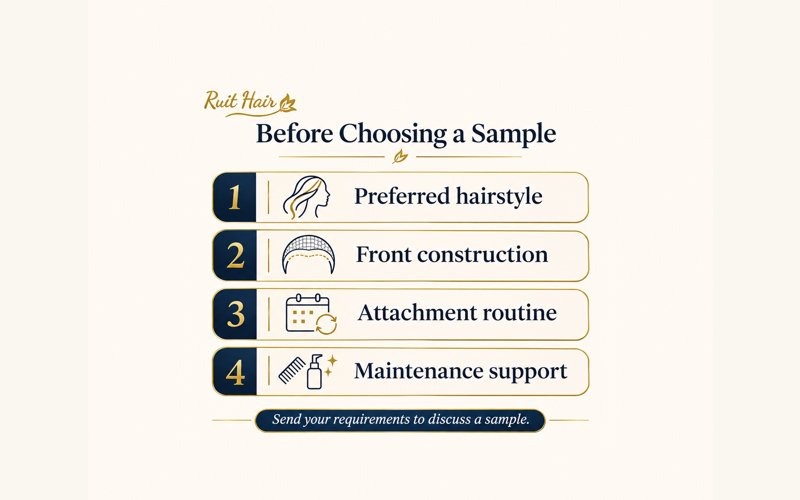
Start with the intended hairstyle: does the client want a clearly exposed front, a forward fringe, or flexibility between both?
Then review the attachment plan: is a lace front with PU sides and back preferred, or is an all-around PU perimeter more suitable for the service routine?
Finally, confirm who will maintain the system, the client's comfort priorities, and the sample's fitted appearance. Use the answers to shortlist a model rather than treating the checklist as an automatic diagnosis.
Choose According to the Client and the Service Plan
Q6 is a useful option to assess when a lace front is a priority. Australia is worth assessing when an all-around PU attachment zone is preferred. Both need the right fit, specifications, attachment products, and maintenance support.
To discuss a suitable sample, send Ruit Hair your client's preferred hairstyle, base dimensions, hair color, density, and maintenance routine. Our stock and custom hair system MOQ is 1 piece; specifications, availability, pricing, and order arrangements are confirmed before ordering.