V-Loop vs Double Split Knot Hair Systems
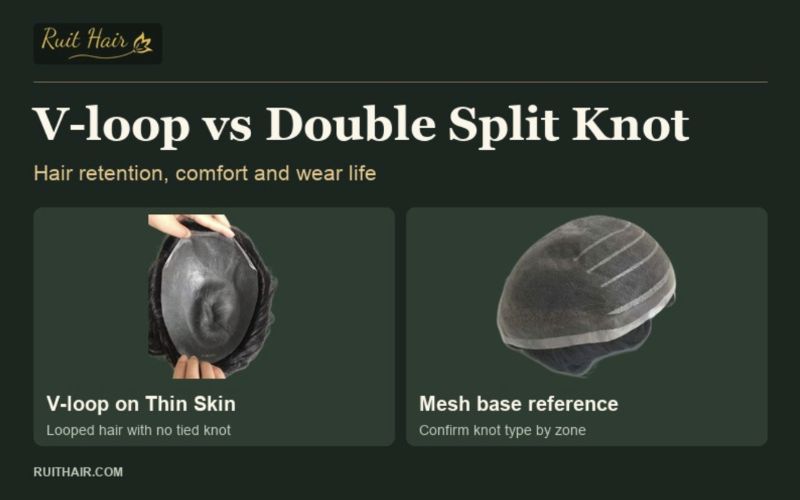
V-loop is a strong sample choice when a knotless front is the priority. Double split knots are worth sampling when stronger hair retention matters more, especially across the body of a compatible lace or mono base. At Ruit Hair, we review the base and the hair attachment method together. The knot can affect hair retention and root visibility, while the base and fitting routine do much of the work when it comes to comfort.
What Changes at the Root?
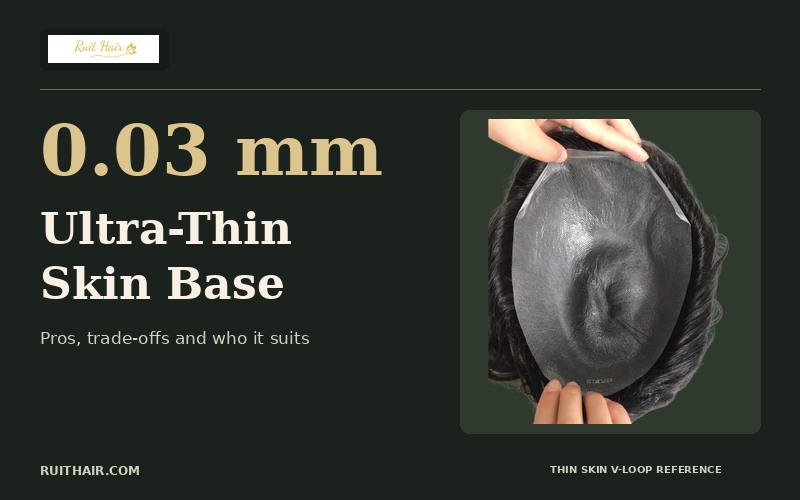
On a V-loop Thin Skin system, the hair passes through the polyurethane (PU) film in a loop without a tied knot. The absence of tied knots can help create a subtle-looking root finish at an exposed front or part. On a double split knot construction, the hair is tied around the threads of a compatible mesh. The stronger hold comes with a more visible knot, especially where density is light or the roots are exposed. Some lace constructions use finer knots at the front and double split knots in the body. Ask for a zone-by-zone specification before approving a sample.
V-loop vs Double Split Knot at a Glance
| What Matters | V-loop on Thin Skin | Double Split Knot on Compatible Mesh |
|---|---|---|
| Front and part | Knotless root finish. Check the actual front in daylight. | Tied roots may be more visible. Check the front separately from the body. |
| Hair retention | Hair can work loose over time. Track localized shedding and edge condition. | The tied attachment generally holds hair more securely. Hair can still break and mesh can still wear. |
| Comfort | Thin PU can feel light and flexible. Full PU film has no open mesh through the base. | An open lace or mono base can allow more airflow. Fit, perimeter and adhesive layout affect the result. |
| Service life | Plan for earlier replacement on delicate V-loop skin constructions. | May extend useful wear when hair retention is the limiting factor. The front, mesh and perimeter still need to hold up. |
After-Sales Rate: Track the Reason Behind Each Case
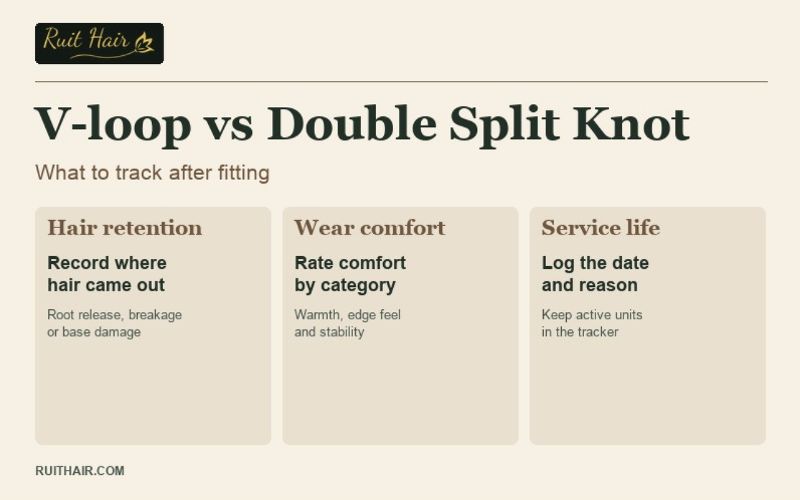
A construction that holds hair more securely can reduce one source of after-sales issues. Total after-sales rates also reflect fit, attachment, color or density mismatch, and the salon’s service process. A loose front bond, a torn edge, and hair coming out of the base are three different events. Record the location and inspect the returned hair or unit before classifying the case. Use separate categories for hair detaching at the root, hair breakage, base damage, and bond or fit issues. Record unresolved causes as unknown.
For a fair 30-day comparison, divide the number of fitted units with at least one qualifying case in the first 30 days by the number of fitted units enrolled in the same model cohort whose 30-day window has elapsed. Report missing follow-up separately. A unit with three messages about the same issue counts once in the overall rate. Apply the same case definition and dates to both groups. When one group is full PU and the other is mesh, read the result as a comparison of two builds. Keep thickness, density, installer, attachment routine and wear pattern comparable where feasible.
Wear Comfort: Ask About Heat, Edge Feel and Fit Separately
Some wearers like the soft, low-profile feel of thin PU. Others prefer the airflow of an open mesh, particularly when they feel warm in a closed base. The knot type alone cannot tell you how a fitted system will feel. Ask the wearer to rate warmth, edge feel and stability at the first service. If the discomfort is at the perimeter, check the contour, fit, tape or adhesive coverage and where the edge sits before changing the hair attachment method.
Service Life: Record Why the Unit Was Replaced
Double split knots may keep more hair in place when compared with a knotless construction, but a system can retire for several reasons. Define the endpoint as the date the unit is taken out of service, then log the reason: visible density loss, breakage, base damage, cosmetic replacement or another cause. Keep units still in use in the record. Reviewing only units that have already been replaced will make the typical service life look shorter. Set customer expectations on the exact approved build after sample review.
Which Sample Should the Salon Order?
Exposed front or defined part: Start with V-loop Thin Skin if the wearer is comfortable with the handling and replacement trade-offs. Assess the front and roots at normal viewing distance in daylight.
Previous early shedding, with retention as the top priority: First confirm whether the issue was root release, breakage or base damage. If root release is the concern, compare a compatible construction with double split knots in the higher-wear areas.
Natural front and stronger retention across the body: Ask whether the approved mesh can use finer front knots and double split knots behind the front. Request the zone map and inspect both areas on the sample.
What to Send With a Sample Inquiry
Share the client’s preferred hairstyle, finished base dimensions and density, which area needs stronger retention, and who handles removals. Read our hair system sample inspection checklist before comparing units. Contact Ruit Hair to discuss a sample and confirm the base material and hair attachment method for each zone.