0.03 mm Ultra-Thin Skin Base: Pros, Cons & Fit | Ruit Hair
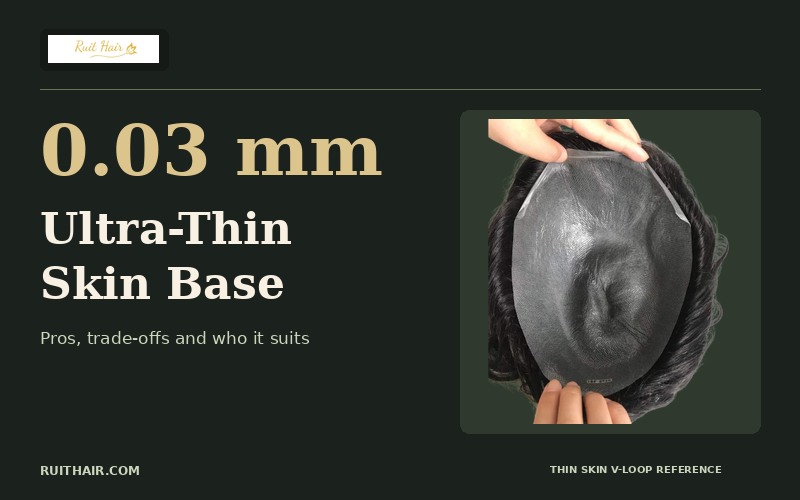
A 0.03 mm ultra-thin skin base is a strong sample choice for a client who wants a subtle front edge and is willing to handle the unit gently. At Ruit Hair, we start with three questions: how much of the hairline will show, who will remove and clean the system, and what the client prioritizes after the first fitting. For clients who value longer wear, frequent at-home removals, or airflow across the base, sample another construction first.
What Is a 0.03 mm Ultra-Thin Skin Base?
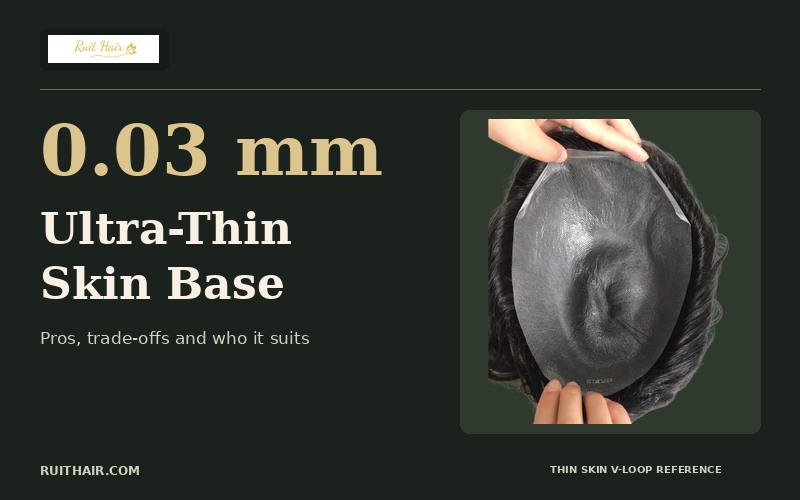
In this guide, 0.03 mm refers to the nominal thickness of the polyurethane (PU) base film. A full-skin base uses a continuous film, including at the front. On a V-loop system, hair is inserted into the film with a looped attachment that leaves no tied knots at the roots. Base thickness and hair attachment method are separate order specifications. Confirm both when you compare samples.
Advantages for the Right Salon Client
A subtle front edge. The thin film can sit close to the scalp. This is worth assessing on a client who wears the front up or brushed back. Fit, contour, lighting and density at the front affect the result.
A clean-looking part on a V-loop unit. The knotless construction removes visible tied knots from the equation. Check the root finish on the sample in the client's intended part and hairstyle.
A light, flexible base with a continuous bonding surface. The thin film suits salons that prefer a full-PU layout and have a routine for fitting, removing and cleaning delicate film.
Trade-Offs to Discuss Before Fitting
Delicate handling. Thin film can be more vulnerable to stretching or tearing when pulled during removal or cleanup. Ask the client who will service the unit and demonstrate the routine on the sample.
Replacement expectations. Allow for earlier replacement than you might budget for with a sturdier construction. Actual service life varies with the unit, wear and maintenance. Discuss the client's acceptable replacement cost and schedule before committing to the specification.
Limited airflow through the film. A continuous PU base lacks the open mesh of lace. If the client often feels hot in a closed base, compare an open-mesh sample.
Density and styling limits vary by model. Confirm the desired density, length and curl with the factory, especially for unusually full or long styles. Match the look at the front to the client's natural side hair.
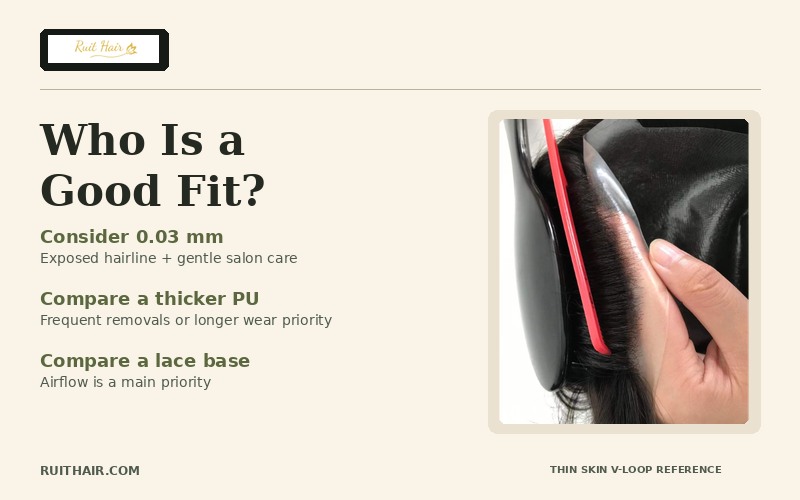
Use the consultation priorities to choose a sample. The photo shows a Ruit Hair Thin Skin V-loop reference.
Who Is a Good Fit for 0.03 mm?
| Client Profile | What to Sample First | What to Check |
|---|---|---|
| Brushed-back style and regular salon service | 0.03 mm V-loop Thin Skin | Inspect the front on the client in daylight, from the front and side. Demonstrate gentle removal and cleanup. |
| Fine side hair and a defined part | 0.03 mm V-loop at a suitable density | Check the root appearance along the part and compare the density with the client's own hair. |
| Frequent at-home removal or longer service life is the priority | A thicker PU sample, such as 0.06–0.08 mm where available | Compare edge handling, the finished front and hair attachment method. If hair retention is a priority, ask about a compatible knotted option. |
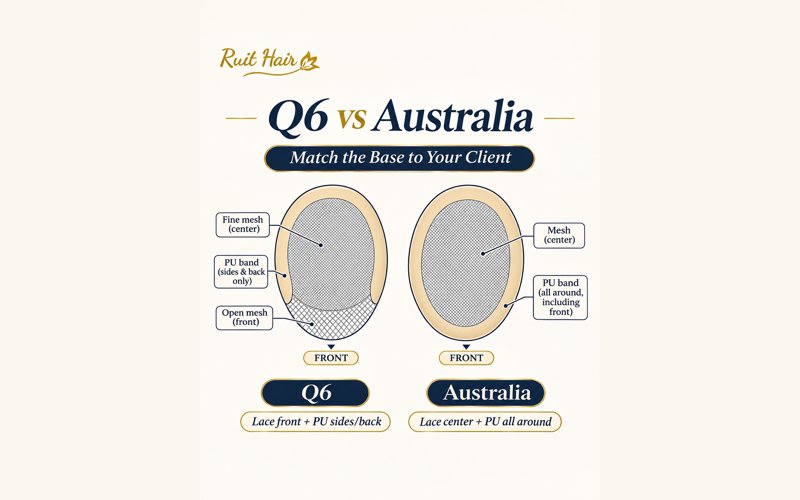
| Warm-climate or active client who prioritizes airflow | Lace, or a lace-center hybrid if a PU bonding area is preferred | Compare comfort and the attachment plan. Use the client's activity and service routine to decide whether to keep full PU on the shortlist. |
| Client requests very high density or long hair | A construction approved for the requested hair specification | Ask the factory to confirm density, length and curl together before promising the result. |
How to Run the Consultation
Start with the haircut. Ask the client how they style the front on a typical day. Check the sample with the hair positioned that way, including under daylight.
Ask who handles removal. Have the technician show how the thin edge is supported during removal and cleanup. If the client will service it at home, assess whether the routine is realistic for them.
Agree on one priority. Ask the client to choose between a subtle front, easier handling during maintenance, and airflow. Start with the sample that best tests that priority.
Record the approved build. Log the finished size, front contour, density, color, base thickness and ventilation method. Review comfort and edge condition after the first service before placing a repeat order.
Questions Salons Ask
Can a First-Time Wearer Start With 0.03 mm?
Yes, if they understand the replacement trade-off and have access to salon maintenance or can demonstrate gentle handling. When a beginner plans frequent at-home removals, compare thicker PU first.
Is 0.03 mm Always the Best Option for an Exposed Hairline?
The fitted hairline depends on the contour, fit, density, scalp contrast and attachment. Compare a 0.03 mm V-loop front and a lace front on the client if they care equally about appearance and airflow.
How Long Does a 0.03 mm V-Loop Unit Last?
Use the exact model specification and the client's maintenance habits to discuss expectations. Record the edge condition and signs of shedding at the first service, then adjust the replacement plan using observations from that wearer.
Discuss a Sample With Ruit Hair
Send your client’s usual hairstyle, finished base size, color, density and who will handle maintenance. We can help you decide what to compare and confirm the specifications and availability before ordering. Contact Ruit Hair to discuss a sample, or see our Thin Skin V-loop product page. For a broader comparison, see our Full Lace, Thin Skin and Australia guide.