Full Lace vs Thin Skin vs Australia Hair Systems | Ruit Hair
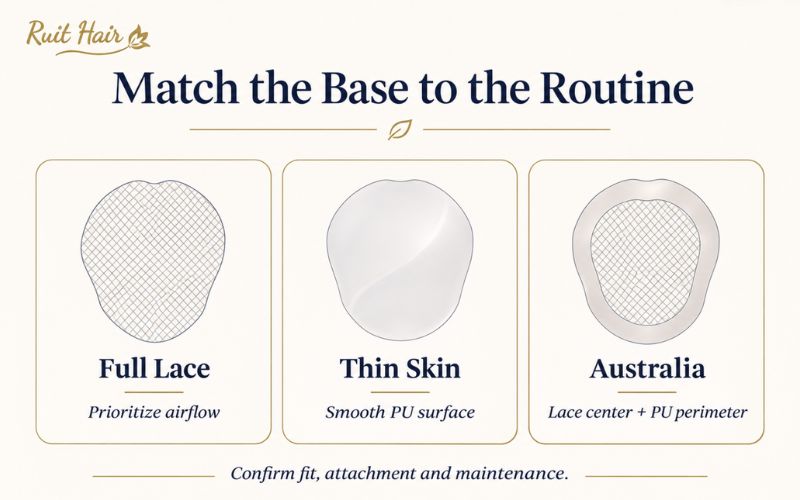
Full Lace, Thin Skin, and Australia hair systems offer different approaches to comfort, attachment, and maintenance. For salons and wholesale buyers, choosing between them starts with the wearer's priorities and the service routine your team can support.
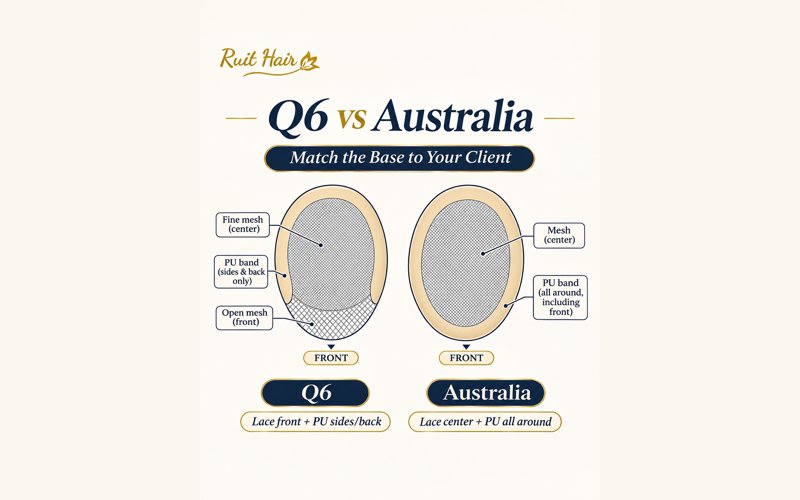
The main distinction is the base construction: Full Lace uses a mesh base, Thin Skin uses a continuous polyurethane film, and Ruit Hair's Australia model combines a Swiss lace center with a clear PU perimeter all around. Australia is a model name here, rather than a claim about where the product was made.
This guide focuses on men's partial hair systems. Check the exact model specification before applying the same advice to a women's topper or a full wig.
1. Full Lace: Consider It When Airflow Is a Priority
A Full Lace hair system uses a mesh foundation across the base. The open structure allows airflow through the material, making it worth considering for clients who prioritize ventilation.
For a salon, the important decision is which lace construction suits the client. Lace type, density, knots, hairline design, and finishing all influence the result. A Full Lace label alone does not tell you whether knots are bleached or how a finished hairline will look.
Discuss the intended hairstyle and show a representative sample. An exposed hairline needs careful placement, appropriate density, and a suitable attachment method, alongside the choice of base.
Maintenance also needs attention. Lace should be supported during removal and cleaning, and residue in the mesh may require careful work. Choose compatible products and demonstrate the handling routine rather than pulling tape or adhesive away from delicate lace.
Choose Full Lace when the client values an open mesh base and accepts the care needed to maintain it.
2. Thin Skin: Consider It for a Smooth PU Bonding Surface
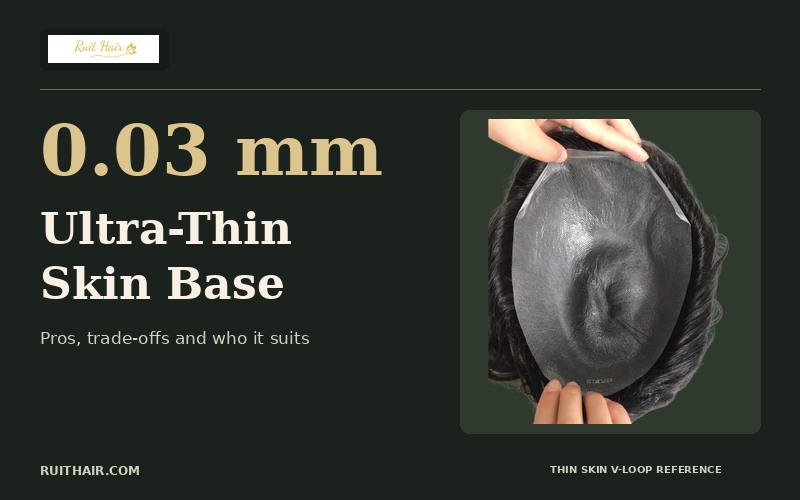
A Thin Skin hair system uses a thin, continuous polyurethane base. Its translucent film can allow the wearer's scalp tone to show through, while providing a smooth surface for an appropriate attachment system.
Thin Skin covers a range of constructions. Confirm the actual thickness and whether the hair is V-looped, injected, or knotted. These details affect appearance and handling, so two products described as Thin Skin may perform differently.
The continuous film does not provide the same open-mesh airflow as lace. Discuss the client's comfort preferences, climate, activity, and previous wearing experience before recommending it.
A smooth surface can make residue easier to access than residue caught in mesh, but thin film still needs gentle handling. Avoid stretching or peeling it aggressively. Thinner does not automatically mean better: the choice should account for appearance, handling, and the client's replacement budget.
Choose Thin Skin when the client prefers a continuous skin-style base and your salon can provide a suitable bonding and removal routine.
3. Australia: Consider It for a Lace Center with a PU Perimeter
In this comparison, Australia refers to Ruit Hair's AUS construction: a Swiss lace center with a clear PU perimeter all around. It combines a mesh central area with a defined perimeter for attachment.
For salons, this can be a useful option when the client wants airflow through the center and the technician prefers working with a PU attachment zone. The perimeter width, thickness, and usable bonding area should be checked on the actual unit.
The front matters. A PU perimeter all around means the front edge is also PU; it should not be described as an exposed lace front. If a client wants a brushed-back hairstyle, examine the front construction, density, and fitted appearance before recommending the model.
Cleaning involves two materials. The PU perimeter and lace center should be handled according to their respective needs, using compatible products and avoiding strain where the materials meet.
Choose Australia when the combination of a mesh center and PU perimeter suits the client's comfort preferences and the salon's attachment routine.
A Quick Comparison for Salon Consultations
Full Lace — Mesh across the base. Start here when open-mesh ventilation is a key priority. Review lace handling, knot appearance, and the attachment plan.
Thin Skin — Continuous PU film. Start here when the client prefers a skin-style base and smooth bonding surface. Review thickness, ventilation method, comfort, and removal technique.
Australia — Swiss lace center with a clear PU perimeter all around. Start here when a central mesh area and a defined PU attachment zone are both useful. Review perimeter dimensions and the PU front edge.
4. Match the Base to the Client's Actual Routine
Begin the consultation with practical questions. Does the client usually wear the hair forward or off the forehead? How important is ventilation? Who will remove and clean the unit? How often can the client return to the salon?
For someone who prioritizes airflow, assess Full Lace first, then consider whether Australia's lace center offers a suitable alternative. For someone who prefers a smooth PU surface, examine Thin Skin alongside the planned attachment products and handling routine.
A first-time wearer does not automatically need one particular base. Their ability to follow the care routine, access to salon support, and comfort with the fitted sample are more useful guides.
For active clients, discuss perspiration and maintenance as well as base material. No base alone guarantees a particular hold time or makes every activity suitable immediately after attachment. Follow the attachment product's instructions for curing and water exposure.
5. Compare Service Costs, Not Only Unit Prices
When comparing Full Lace vs Thin Skin vs Australia hair systems, ask for quotations based on otherwise comparable specifications. Hair material, processing, length, density, color, and customization can all change the price.
Also consider fitting time, maintenance visits, cleaning products, and expected replacement planning. A lower unit price may not translate into a lower overall service cost for a particular client.
Avoid promising a fixed lifespan based only on the base name. Actual wear depends on construction, handling, attachment removal, care, and frequency of use. Evaluate the specific unit and explain any estimate as an estimate.
6. What Should Wholesale Buyers Confirm Before Ordering?
Request a clear underside photograph and a written specification for each model. Confirm the base size, front contour, material layout, hair color, density, length, texture, and hair direction.
For Full Lace, confirm lace type, knot treatment, and any reinforcement. For Thin Skin, confirm thickness and hair insertion method. For Australia, confirm the lace type, PU perimeter width and thickness, and front construction.
Keep an approved sample or documented reference for repeat orders. Product names are useful for communication, but the construction and agreed specifications should guide inspection and reordering.
Choose the Base You Can Fit, Explain, and Maintain
Full Lace, Thin Skin, and Australia can each suit different clients. The strongest recommendation connects the base construction to the intended appearance, comfort preferences, and care routine.
Ruit Hair offers stock and custom hair systems with an MOQ of 1 piece. Share your client's requirements or your wholesale sourcing brief to discuss suitable models, specifications, availability, and pricing before ordering.