First Wholesale Hair System Order: Specs to Provide | Ruit Hair
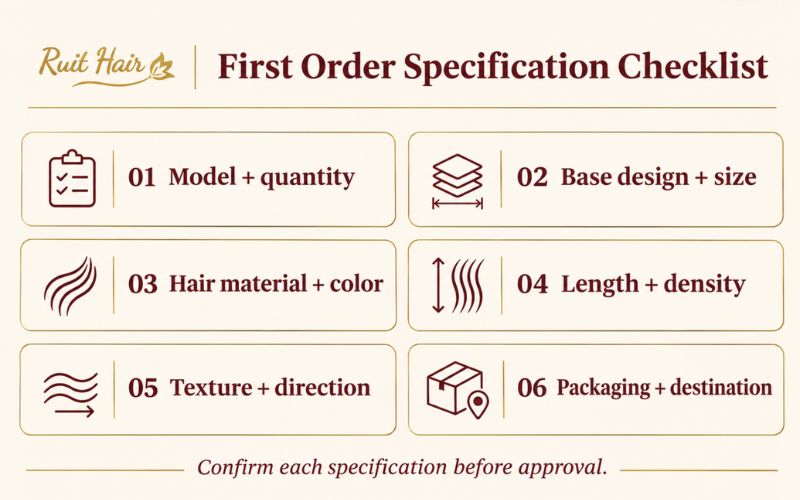
A clear specification helps turn a first inquiry into an order that both the buyer and factory understand. For salons, distributors, and hair replacement brands, it also creates a reference for checking the delivery and placing repeat orders.
You do not need to know every manufacturing detail before contacting a supplier. Start with the product you need, the appearance you want, and the quantities you are considering. Then work through the remaining details before approving the order.
Here is what to prepare for your first wholesale hair system order, whether you are selecting stock products or discussing custom units with Ruit Hair.
1. Product Type, Model, and Quantity
Identify whether you need a men's partial hair system, a women's topper, or a full wig. Include the supplier's model code if you have already selected a product, along with a product link or reference image where useful.
State whether you want an available stock specification or a custom construction. A stock order starts from an existing model; changes may require a custom order and a different quotation or schedule.
List the quantity for each specification combination separately. An order for ten units is incomplete if the factory does not know how many units you need in each model, color, and size. Use one line per distinct combination so the order can be checked easily.
2. Base Construction and Material Layout
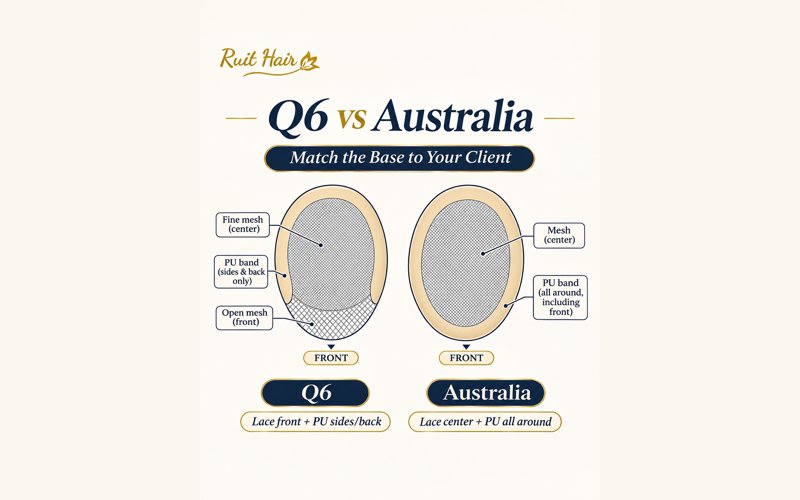
Describe the foundation of the system. Common options include full lace, continuous thin skin, and combinations of mesh with PU attachment areas.
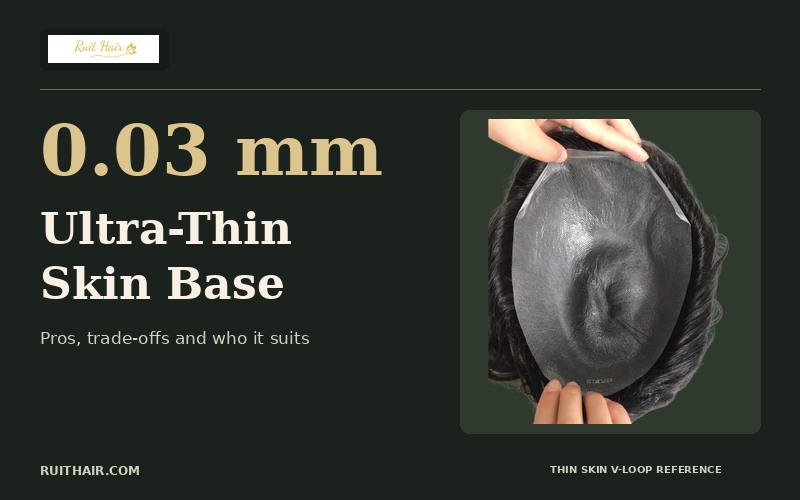
Go beyond a general model name when discussing a custom order. Confirm which material is used at the front, center, sides, and back. For a hybrid base, specify the location and width of the PU areas. For thin skin, confirm the thickness specification and hair insertion method with the supplier.
An underside photograph or a simple labeled sketch can clarify the layout. If you are unsure which construction suits your clients, explain their hairstyle, attachment preferences, and maintenance routine so the options can be discussed.
3. Base Size, Shape, and Front Contour
Provide the base width and front-to-back length, with the unit of measurement clearly stated. Label the orientation instead of relying on an unlabeled pair of numbers.
A partial system may also need a front contour and a template to describe the shape. For a custom fit, ask whether the factory requires a physical template, mold, or other measurement record, and how it should be labeled and sent.
A full wig requires a different measurement set from a partial hair system. Ask for the relevant measurement guide rather than assuming width and length alone are sufficient.
Keep base dimensions separate from hair length. They describe different parts of the product and should have their own fields on the order sheet.
4. Hair Material and Processing Requirements
State whether you are requesting human hair, synthetic hair, or a particular agreed blend. For human hair, clarify what the supplier means by any proposed material or processing description.
Terms such as Remy, virgin, and European hair should be discussed in specific terms. Ask about the claimed source and processing history where these matter to your business, and confirm what evidence is available.
Tell the supplier if you intend to color, bleach, perm, or heat-style the hair after delivery. Do not assume that every product can tolerate the same salon services; suitability needs to be confirmed for the selected hair and construction.
5. Hair Color, Gray Percentage, and Color Distribution
Use the supplier's color-ring reference where available. Color codes from different suppliers should not be assumed to match, and photographs can appear different across screens and lighting conditions.
If a close match is important, discuss sending a physical hair sample. Label it with the order reference and the section it represents.
For gray hair, specify the requested percentage and its distribution, such as an even blend or different amounts at the temples and top. Confirm the gray fiber type and suitability for any planned styling services.
Highlights, lowlights, and rooted effects also need a clear description of the colors, proportions, and placement. A reference image is useful, but the final agreed specification should explain what the factory is being asked to reproduce.
6. Hair Length and Density by Area
State the hair length and the measurement method agreed with the supplier. For wavy or curly hair, confirm whether the quoted length is measured stretched or in its resting pattern.
If lengths vary across the unit, provide a section-by-section description rather than a single number. Explain whether you want an uncut unit for salon finishing or a specific pre-styled result, subject to confirmation.
For density, use the supplier's reference scale and discuss distribution. A lighter front and fuller top require more detail than one overall percentage. Density labels are not a universal standard across manufacturers, so an approved sample can be a useful reference.
7. Wave, Curl, Hair Direction, and Hairline
Provide the supplier's texture code or agreed curl measurement where available. Descriptions such as “slightly wavy” are a starting point, but a reference sample or image can help clarify the intended pattern.
Specify hair direction, parting, and crown position where these are important to the design. A brushed-back style, fixed side part, and freestyle unit can require different instructions.
For an exposed hairline, discuss front density, contour, knot treatment where applicable, and construction compatibility. Not every base uses knots, and not every color or hair type can receive the same treatment. Record only the features confirmed for your selected product.
8. Attachment Features and Packaging
Tell the supplier how the system will be attached. If clips, reinforced areas, or other features are requested, specify their position and confirm that they are suitable for the base.
List any accessories separately, including whether they should be supplied with the unit or simply considered when choosing the construction.
For private-label packaging, provide the artwork and requested packaging details for review. Printed boxes, labels, and inserts may have separate setup costs or minimum quantities. A low hair system MOQ should not be assumed to cover every branding request.
9. Delivery Information and Order Approval
Provide the delivery country, postal code, recipient details, and your preferred receiving date. Distinguish that date from a factory dispatch date, and ask the supplier to confirm stock availability or production timing before making commitments to clients.
Request a written order summary showing the agreed specifications, quantities, price, included services, and shipping arrangements. Clarify payment terms, inspection requirements, and the procedure for reporting any difference from the approved specification.
If you are sending a sample or template, ask how receipt and approval will be confirmed. Keep a dated version of the final specification so later messages do not create uncertainty about which details were approved.
A Practical Way to Organize Your First Order
Use one specification sheet for each distinct product combination. Give it an internal reference and record the model, base design, dimensions, hair details, quantity, and supporting samples together.
For a stock order, you may only need to select and confirm the available options. For a custom order, review the construction and appearance in more detail before production. If a field is undecided, ask the supplier for options rather than leaving it open to interpretation.
Start with a Clear Brief and Confirm the Details Together
The purpose of a wholesale hair system specification is to make the intended product clear enough to quote, produce, inspect, and reorder. A well-organized first order gives both the factory and buyer a practical reference for future work.
Ruit Hair's MOQ is 1 piece for stock and custom hair systems. Send your selected model or product requirements, quantity, and delivery destination to begin the discussion. We can then review the remaining specifications and confirm pricing, availability, and order arrangements before you proceed.