Hair System Salon FAQ: Client Service Tips | Ruit Hair
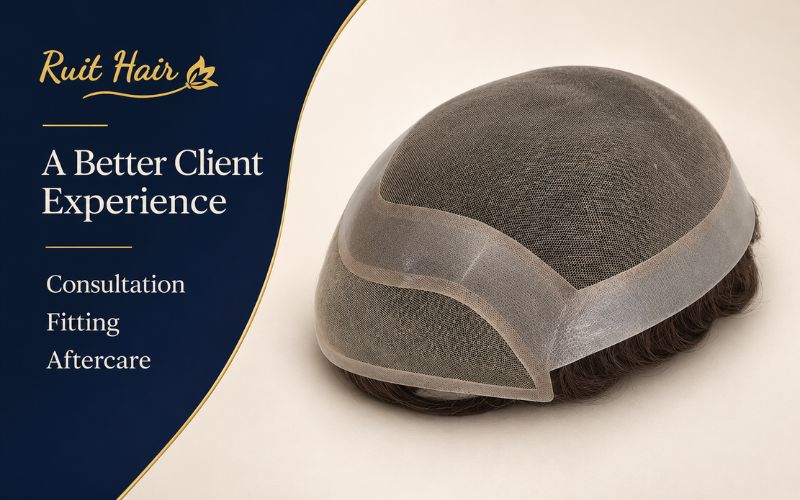
A successful hair system service begins before the fitting and continues after the client leaves the salon. Clients want to understand how their hair will look, how it will fit into daily life, and what support they can expect when something needs attention.
For hair system salon retailers, clear answers help clients make informed choices and prepare for ongoing care. From a factory and wholesale perspective, those conversations also provide the specifications needed to supply a suitable product and support future orders.
Use the following hair system salon FAQ as a guide for consultations, fitting appointments, and aftercare discussions for men’s hair systems, women’s toppers, and full wigs.
1. What Should We Ask at the First Consultation?
Begin with the client’s priorities rather than a product recommendation. Ask about their preferred hairstyle, coverage needs, daily routine, styling habits, budget, and willingness to attend maintenance appointments.
Discuss whether they want a removable option or a system intended for extended wear. Ask about previous experiences with hairpieces and any known reactions to attachment or care products. A private consultation space can make these conversations more comfortable.
Record measurements, color references, and the desired appearance. Obtain permission before taking photographs, and ask separately before using any images for marketing.
2. How Can We Help Clients Choose a Natural-Looking Hair System?
Explain that the overall result depends on several choices working together: base fit, hair color, density, hairline placement, cut, and blending with existing hair.
Use samples to discuss realistic options. A client seeking a subtle change may prefer a different density or hairline from someone who wants a fuller style. Check the proposed color and blend in more than one lighting condition where practical.
Avoid promising that a system will be invisible in every situation. Instead, show the client what the selected construction and styling can achieve and agree on the intended result before cutting or fitting.
3. Should We Recommend Stock or Custom Hair Systems?
A stock hair system can be suitable when the available specifications match the client’s requirements. Confirm the actual model, color, dimensions, and availability before booking the service around it.
A custom hair system may be appropriate when the client needs a specific base shape, size, color combination, density distribution, or other specification that stock options do not provide.
Custom does not automatically mean better for every client. Choose according to fit, appearance, routine, and budget. At Ruit Hair, the MOQ is 1 piece for both stock and custom hair systems, allowing salons to evaluate a unit or order for an individual client.
4. What Should We Say About Attachment and Hold?
Explain the proposed attachment method and why it suits the selected base and the client’s routine. Clips, tapes, and liquid adhesives serve different requirements; they are not interchangeable across every product or wearer.
For tapes, adhesives, and preparation products, follow the manufacturer’s compatibility, skin-testing, application, and curing instructions. A small-area test does not guarantee that a reaction will never occur.
Avoid guaranteeing a fixed hold time. Skin condition, perspiration, preparation, products, and daily activity can affect the bond. Give the client clear instructions on what to do if an edge lifts, rather than encouraging them to keep adding adhesive without assessment.
5. Can Clients Exercise, Shower, Swim, or Sleep in a Hair System?
Answer for the specific system and attachment method. A removable topper and a bonded hair system may require very different routines.
Discuss exercise, water exposure, and overnight wear before the fitting. Where bonding products are used, explain the manufacturer’s waiting period before washing or heavy perspiration. Swimming and frequent water exposure should be included in the care plan rather than treated as an afterthought.
Provide written instructions that match the actual products used. If the client’s routine changes, review the plan with them.
6. How Often Will Maintenance Be Needed?
Set an initial review appointment based on the system, attachment method, supplier guidance, and the client’s needs. Adjust the schedule after seeing how the system and attachment perform in use.
Distinguish attachment maintenance from replacing the hair system itself. A unit may need cleaning and reattachment while remaining usable, and different clients may need different service intervals.
Before the client leaves, explain what the next appointment includes, how much it costs, and which signs should prompt an earlier call.
7. What Should We Include in an Aftercare Handover?
Demonstrate the routine instead of relying only on verbal advice. Show how to detangle, wash, dry, and style the selected hair system using compatible products and appropriate handling.
Ask the client to repeat the key steps so you can identify anything unclear. For heat styling, coloring, or chemical treatments, confirm what the hair and construction can tolerate before recommending a service.
Provide a short take-home guide covering the care routine, attachment precautions, appointment details, and a salon contact. A simple routine that the client understands is more useful than a long list of products without instructions.
8. How Long Will a Hair System Last?
Discuss lifespan as an estimate for the chosen product and wear pattern. Base construction, hair processing, handling, attachment removal, styling, and frequency of use all affect wear.
Avoid presenting a single replacement interval as a guarantee. Explain the signs you will review together, such as changes in hair condition, shedding, or damage to the base.
Record the product supplied and the care instructions given. This creates a clearer starting point for future advice, replacement planning, and supplier discussions.
9. What If a Client Reports Itching, Lifting, or Discomfort?
Give clients a clear route to contact the salon and encourage them to report problems promptly. Ask when the issue began, which products were used, and whether anything changed in their routine.
For discomfort or a suspected reaction, follow the relevant product instructions and arrange appropriate assessment. Do not advise a client to cover irritated skin with more adhesive. Persistent or significant skin symptoms should be assessed by a qualified healthcare professional.
For lifting or an appearance concern, review the fit, preparation, attachment, styling, and care history before deciding on the next step. Explain the proposed solution and any costs before proceeding.
10. How Should We Explain Pricing and After-Sales Support?
Present the complete service plan. Separate the hair system price from cutting, fitting, attachment products, maintenance visits, care products, and eventual replacement where these are charged individually.
Explain alteration, cancellation, return, and after-sales terms before ordering or modifying a unit. Make sure clients understand how cutting, coloring, or customization affects the applicable policy.
Written quotes and consultation notes give both parties a useful reference. They also make it easier to discuss whether a concern relates to the supplied product, fitting service, or subsequent care.
11. What Information Should a Salon Keep for Reorders?
Keep a client specification record that includes the model or order reference, base dimensions, color, gray percentage where relevant, density, length, texture, and approved adjustments.
Add fitting notes and feedback from the first maintenance visit. Keep supplier product details separately from subjective descriptions such as “a little fuller” so the next order can be communicated precisely.
An approved sample, physical color reference, or template can help where appropriate. Review the specification with the client before reordering, as their preferences and existing hair may have changed.
Build a Service Clients Can Understand and Maintain
Good hair system retail service combines an appropriate product with a clear consultation, careful fitting, practical aftercare, and accessible follow-up. Clients should know what they are buying, how to care for it, and whom to contact when they need help.
Ruit Hair supplies men’s and women’s hair systems, toppers, and wigs, with stock and custom orders starting from 1 piece. Share your salon’s client requirements with us to discuss suitable specifications, availability, pricing, and order arrangements.